
Quick Answer Box
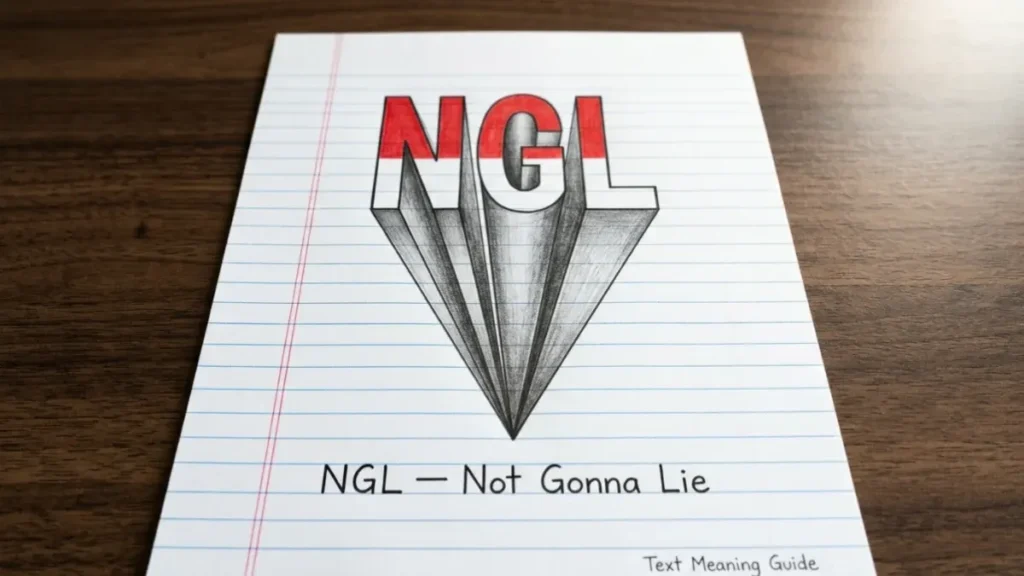
NGL stands for “Not Gonna Lie.” It’s a popular internet slang term used to introduce an honest opinion, confession, or blunt statement. People use NGL in text messages and on social media to show they’re being truthful, genuine, or vulnerable. The acronym signals that what follows is an unfiltered thought, real opinion, or honest feeling. You’ll commonly see NGL on Snapchat, Instagram, TikTok, WhatsApp, X (formerly Twitter), Facebook, and Discord. Outside of texting, NGL can also refer to Natural Gas Liquids in the energy industry. The exact meaning depends entirely on the context.
Introduction
You’re scrolling through your Instagram feed, and someone comments, “ngl, this is the best pizza I’ve ever seen.” Or maybe you get a text from a friend that says, “ngl, I’m not feeling great today.” If you’ve ever wondered what these three little letters mean, you’re definitely not alone.
The ngl meaning in text has become incredibly common across all social media platforms and messaging apps. Understanding this simple acronym helps you communicate better and stay connected with how people express themselves online. Whether you’re a parent trying to understand your teenager’s messages, a professional navigating workplace chats, or just someone curious about modern language, this guide will explain everything you need to know about ngl.
Quick Facts Table
| Fact | Detail |
|---|---|
| Meaning | Not Gonna Lie |
| Pronunciation | “En Gee Ell” (spelled out) or “N-G-L” |
| IPA | /ɛn dʒiː ɛl/ |
| Part of Speech | Acronym / Phrase |
| Word Type | Slang / Internet Abbreviation |
| Difficulty Level | Beginner |
| Common Usage | Texting, Social Media, Casual Conversation |
| American English Usage | Widely used across all age groups online |
| Formality Level | Informal / Casual |
| Tone | Confessional, Honest, Vulnerable, Blunt |
ngl meaning
The core ngl meaning is straightforward. NGL stands for “Not Gonna Lie.” It’s a phrase people use before making a statement to show they’re being completely honest. When someone says “ngl,” they’re basically saying, “I’m about to tell you the truth, even if it’s awkward, surprising, or maybe not what you want to hear.”
Think of it as a verbal signal that prepares the listener for an unfiltered thought. It’s like saying, “I’m going to be real with you right now.” The phrase helps soften potentially harsh statements or makes honest confessions feel more natural in casual conversation.
People use ngl in all kinds of situations. You might see it before compliments, complaints, personal feelings, opinions, or even jokes. The common thread is honesty. When someone types ngl, they’re signaling that what follows is their genuine thought, not just something polite or expected.
ngl
The acronym ngl works as a standalone conversational tool. It doesn’t need any additional words to make sense. In fact, many people start their messages with just “ngl” followed by whatever they want to say. The brevity makes it perfect for quick texts and social media posts.
What makes ngl so popular is its versatility. You can use it before positive statements, negative statements, or neutral observations. It’s not limited to any specific topic or situation. Whether you’re talking about food, feelings, work, relationships, or everyday observations, ngl fits right in.
The term has become so common that many people don’t even think twice about using it. It’s become a natural part of online communication, especially among younger generations. But you’ll find people of all ages using ngl these days, as internet slang continues to cross generational boundaries.
Word Origin (Etymology)
NGL emerged from internet culture and texting conventions that developed in the early 2000s. As text messaging became more popular, people started shortening common phrases to save time and typing effort. “Not Gonna Lie” became “NGL” following the same pattern as other acronyms like LOL (Laugh Out Loud), BRB (Be Right Back), and TTYL (Talk To You Later).
The phrase “not gonna lie” itself comes from casual spoken English, where people would say it before making honest statements. When text messaging and online chat rooms gained popularity, the acronym version became a natural evolution. It allowed people to convey the same meaning without typing the entire phrase.
By the mid-2010s, ngl had become widely recognized across all major social media platforms. It’s now used globally by English speakers, though it’s most common in American and British online communities. The acronym continues to evolve in meaning and usage, but its core purpose remains the same.
Pronunciation Guide
IPA: /ɛn dʒiː ɛl/
Easy Pronunciation: N-G-L
Syllables: Three distinct letters
Stress: Equal emphasis on all three letters
When speaking, you pronounce ngl by saying each letter individually. The “N” sounds like “en,” the “G” sounds like “gee,” and the “L” sounds like “ell.” There’s no special pronunciation rule—you just spell out the acronym.
In spoken conversation, some people might say the full phrase “not gonna lie” instead of spelling out the letters. This often depends on the context. In casual conversation, people might use both interchangeably. In more formal settings, it’s better to avoid the acronym entirely and use proper English.
Part of Speech
NGL functions primarily as an adverbial phrase or discourse marker. It sets the tone for the statement that follows. In grammatical terms, it works similarly to other introductory phrases like “honestly,” “to be honest,” or “frankly.”
The acronym itself is a fixed phrase that doesn’t change form. You can’t pluralize it or change its tense. It always appears as “ngl” in writing, regardless of the sentence structure or the verb tense that follows.
When using ngl, it typically appears at the beginning of a sentence or clause. You might also see it placed at the end of a statement for emphasis, though this is less common. The position doesn’t affect the meaning—it still signals honesty either way.
Grammar Notes
Countability: Not applicable (acronym)
Plural: None (doesn’t have a plural form)
Verb Forms: Not applicable
Adjective Form: None
Adverb Form: NGL itself functions as an adverbial phrase
Capitalization: Can appear as NGL (uppercase), ngl (lowercase), or Ngl (title case). Lowercase “ngl” is most common in casual writing.
Punctuation: Usually followed by a comma when used at the beginning of a sentence, but this isn’t strictly required in informal writing.
Tense Usage: Can be used with any tense. The acronym doesn’t change, but the verb that follows determines the tense.
Subject-Verb Agreement: The verb after ngl should agree with whatever subject follows the acronym.
Example: “Ngl, I am tired” vs. “Ngl, she is tired”
Real-Life Meaning
In everyday American life, ngl serves as a social tool that makes honest communication feel more comfortable. Imagine you’re at a restaurant with friends. One friend asks if you like their new outfit. Instead of saying something polite that might not be true, you might say, “Ngl, that color looks amazing on you.” The ngl tells them you’re being genuine, not just being nice.
At work, you might see ngl in team chats or emails between colleagues who have a casual relationship. Someone might write, “Ngl, I’m struggling with this project deadline.” This signals vulnerability and opens the door for help or understanding from coworkers.
In dating and relationships, ngl often appears before confession or vulnerability. Someone might text, “Ngl, I really like spending time with you.” The acronym makes the statement feel less intimidating and more casual, even when the content is serious.
For students, ngl appears frequently in group chats and social media. A student might post, “Ngl, that test was brutal,” or “Ngl, I didn’t study at all.” It’s a way to share honest experiences with peers without feeling judged.
Parents encountering ngl in their children’s messages might initially feel confused. But understanding the ngl meaning helps bridge the communication gap. It’s simply a way for young people to express honesty in a casual, low-pressure way.
Examples
Here are 10 clear examples showing how ngl appears in everyday communication:
- “Ngl, this coffee is terrible” – Honest opinion about something negative
- “Ngl, I cried at the end of that movie” – Confession about emotional reaction
- “Ngl, she’s really talented” – Genuine compliment
- “Ngl, I forgot your birthday” – Honest admission of a mistake
- “Ngl, this is the best burger I’ve ever had” – Strong positive opinion
- “Ngl, I have no idea what I’m doing” – Confession about confusion
- “Ngl, your outfit is fire today” – Compliment using slang
- “Ngl, I’m exhausted and it’s only Tuesday” – Honest complaint
- “Ngl, I’m actually nervous about this interview” – Vulnerability
- “Ngl, I’ve been thinking about what you said” – Opening up a deeper conversation
Example Sentences
Here are 15 natural example sentences across different contexts:
School Context
- “Ngl, I didn’t study for the exam at all.”
- “Ngl, this math homework is impossible.”
- “Ngl, I’m actually enjoying this history class.”
Business Context
- “Ngl, I think we need to reconsider our strategy.”
- “Ngl, the quarterly numbers are better than expected.”
- “Ngl, I’m not sure about this approach, but let’s try it.”
Healthcare Context
- “Ngl, I’ve been putting off going to the doctor.”
- “Ngl, this medication makes me feel weird sometimes.”
Technology Context
- “Ngl, I prefer Android over iPhone.”
- “Ngl, this new app update is frustrating.”
Daily Life Context
- “Ngl, I’m already thinking about dinner.”
- “Ngl, this weather is making me depressed.”
Sports Context
- “Ngl, our team isn’t going to win this season.”
- “Ngl, that play was incredible.”
Family Context
- “Ngl, my mom makes the best lasagna in the world.”
Synonyms
Understanding synonyms helps you grasp the full ngl meaning and use alternative expressions when needed.
Honestly – The most direct synonym. Used to emphasize truthfulness. Example: “Honestly, I don’t care what they think.”
To be honest – A longer but equally common alternative. Example: “To be honest, I was hoping you’d say that.”
Frankly – Slightly more formal version that indicates blunt truth. Example: “Frankly, I think we need to start over.”
Truth be told – A more expressive way to introduce honesty. Example: “Truth be told, I never really liked that show.”
I’ll be real – Casual phrase that means the same thing. Example: “I’ll be real, that was a bad decision.”
Just saying – Often used after a statement to emphasize honesty. Example: “That dress doesn’t fit you, just saying.”
Antonyms
While ngl doesn’t have direct antonyms, here are phrases that communicate the opposite idea.
Not gonna lie – The full form of ngl itself isn’t an antonym, but here are contrastive phrases.
I’m lying – The direct opposite, though rarely used in conversation.
Just kidding – Used to signal that a statement isn’t truthful. Example: “I hate you… just kidding!”
Not really – Can negate a statement’s honesty. Example: “I love your cooking… not really.”
To be polite – Indicates you’re saying something kind rather than truthful. Example: “To be polite, I said I liked it.”
I’m exaggerating – Shows the truth is being stretched for effect. Example: “I’ve told you a million times, and I’m exaggerating.”
Similar Words Comparison
NGL vs Honestly
Honestly is a more formal and widely accepted word that works in professional settings. NGL is specifically informal and used primarily in casual digital communication. You’d say “honestly” in a job interview, but you’d probably use “ngl” in a text to a friend.
NGL vs TBH
TBH stands for “To Be Honest.” These two acronyms are extremely similar and often used interchangeably. The main difference is that TBH can also be used as a standalone noun meaning “honest opinion.” For example, someone might ask “Give me your TBH” meaning “Give me your honest opinion.”
NGL is slightly more focused on confessing something personal or vulnerable. It often precedes statements that might be difficult to admit. TBH can be used more broadly in various contexts.
NGL vs LOL
LOL means “Laugh Out Loud” and indicates amusement. NGL indicates honesty. While both are internet acronyms, they serve completely different purposes. You might say “Ngl, I LOL’d at that” meaning “Honestly, I laughed at that.”
NGL vs IMO
IMO means “In My Opinion.” While both introduce personal perspectives, IMO signals subjective belief while NGL signals honest truth. You might say “IMO, this is the best restaurant” but “Ngl, I was disappointed” to indicate a genuine feeling.
Common Phrases
Here are 10 common phrases that include or relate to ngl:
- “Ngl but” – Used to introduce a contrasting honest opinion. “Ngl but, I think you’re wrong about that.”
- “Ngl though” – Adds emphasis to the honesty. “Ngl though, that was kinda rude.”
- “Ngl lowkey” – Combining slang terms to indicate mild but genuine feelings. “Ngl lowkey, I’m excited.”
- “Ngl fr” – “Ngl for real” emphasizes extreme honesty. “Ngl fr, that was amazing.”
- “Ngl kinda” – Softens the honesty. “Ngl kinda wish I had stayed home.”
- “Ngl tbh” – Redundant but common combination of both honesty acronyms. “Ngl tbh, I don’t care.”
- “Ngl at all” – Emphasizes complete honesty. “Ngl at all, that was the best concert ever.”
- “Gotta say ngl” – Combines “got to say” with ngl for emphasis. “Gotta say ngl, I’m impressed.”
- “Ngl about it” – Used when referencing a specific topic. “Ngl about it, I was nervous.”
- “Ngl even” – Emphasizes honesty despite expectations. “Ngl even I was surprised.”
Idioms
While ngl itself isn’t an idiom, here are related expressions that convey similar meaning.
“Call it like I see it” – Meaning to be honest and direct. “I call it like I see it, and that was a mistake.”
“Bite the bullet” – To face something difficult honestly. “I had to bite the bullet and tell her the truth.”
“Get real” – A demand for honesty. “Get real, you know that’s not true.”
“Face the music” – To accept honest consequences. “It’s time to face the music and admit what happened.”
“Come clean” – To be completely honest about something. “I need to come clean about what I did.”
“Shoot from the hip” – To speak honestly without thinking first. “He shoots from the hip and tells everyone what he thinks.”
Collocations
These words and phrases commonly appear near ngl in natural conversation.
Verbs:
- think (ngl, I think…)
- feel (ngl, I feel…)
- say (ngl, I gotta say…)
- know (ngl, I know…)
- want (ngl, I want…)
- need (ngl, I need…)
Adverbs:
- honestly (ngl honestly…)
- actually (ngl actually…)
- genuinely (ngl genuinely…)
- really (ngl really…)
Intensifiers:
- kinda (ngl kinda…)
- really (ngl really…)
- pretty (ngl pretty…)
- totally (ngl totally…)
- absolutely (ngl absolutely…)
Common Mistakes
Mistake 1: Using NGL in Formal Situations
Many people use ngl in emails, professional documents, or formal presentations. This is generally inappropriate. “Not gonna lie” is casual slang and doesn’t belong in professional communication.
Incorrect: “Ngl, I think we should invest in this project.”
Correct: “I believe we should invest in this project.”
Mistake 2: Overusing NGL
Using ngl in every sentence makes it lose its impact. It’s meant to emphasize honesty in specific moments, not as a constant filler phrase.
Incorrect: “Ngl, I’m hungry. Ngl, this food is good. Ngl, I want more.”
Correct: “I’m hungry. Ngl, this food is good. I definitely want more.”
Mistake 3: Using NGL With Obvious Statements
Ngl is unnecessary when you’re saying something that’s clearly true or already obvious.
Incorrect: “Ngl, the sky is blue today.”
Correct: “The sky is blue today.”
Mistake 4: Confusing NGL With NGL App
The acronym ngl has a completely different meaning from the NGL app (an anonymous question-answering app). This confusion happens frequently, especially on Instagram and TikTok.
Mistake 5: Capitalization Errors
While not a major mistake, consistency matters. “NGL” and “ngl” are both acceptable, but mixing them within the same message can look sloppy.
Professional Usage
In professional environments, ngl should be used sparingly and only in very casual internal communications. Here’s how it might appear in different professional contexts.
Internal Team Chat:
“Ngl, I think we need to push back this deadline. We’re not ready.”
Email to Close Colleague:
“Ngl, this project has been more challenging than I expected. Can we chat about it?”
Performance Review (Self-Assessment):
Avoid ngl entirely. Instead use: “I honestly believe I could improve in this area.”
Meeting Notes (Casual):
Avoid in formal documents. Use in informal recap: “Ngl, the client meeting went better than anticipated.”
The key is knowing your audience and context. Ngl works in casual team Slack channels, quick texts to coworkers, and informal check-ins. It doesn’t belong in formal reports, client communications, or any document that needs to maintain professional tone.
Academic Usage
In academic settings, ngl should almost never appear in formal writing. However, you might encounter it in certain academic contexts.
Student Group Chats:
“Ngl, I’m so confused about this assignment.”
Study Groups:
“Ngl, I think we need to focus on chapters 5-7 for the exam.”
Class Discussion Boards (Informal):
“ngl, I found this reading really interesting.”
Academic Papers:
Never use ngl. Use “honestly” or “in reality” instead.
Classroom Presentations:
Avoid ngl in formal presentations. Use “I believe” or “in my view.”
Teachers and professors generally don’t want to see internet slang in academic work. While they might use it casually themselves, students should stick to proper English in assignments and formal communications.
Business Usage
In business contexts, ngl appears primarily in informal internal communication. Here are examples across different business functions.
Sales Teams:
“Ngl, that client meeting was rough. We need a different approach.”
Marketing Departments:
“Ngl, this campaign isn’t performing as well as we hoped.”
Startup Culture:
“Ngl, I’m nervous about this funding pitch.”
HR Communication (Internal):
“Ngl, employee morale seems low this quarter.”
Management (Casual Settings):
“Ngl, I think we made a mistake with that hire.”
Client Communication:
Never use ngl. Always maintain professional language.
Social Media Usage
Ngl is incredibly common across all social media platforms. Each platform has its own ngl culture.
ngl meaning in instagram
On Instagram, ngl often appears in:
- Comment sections before opinions: “ngl, this is stunning”
- Story posts to share genuine feelings: “ngl, I’m having a tough day”
- DM conversations for honest exchanges
- Caption emphasis to show authenticity
Instagram users frequently combine ngl with other slang. You might see “ngl lowkey” or “ngl fr” in comments. The term is particularly popular in fashion, food, and lifestyle posts where people share honest opinions about products or experiences.
ngl meaning from a girl
When a girl uses ngl, it carries the same general meaning. However, there are some nuances in how it might be used in different contexts.
In dating contexts: A girl saying “ngl” before a statement might indicate genuine interest, vulnerability, or honesty about feelings. Example: “ngl, I had a really good time tonight.”
In friendships: Girls often use ngl for honest support or constructive feedback. Example: “ngl, that dress looks amazing on you.”
In group chats: Ngl helps maintain honesty among friends. Example: “ngl, I’m kinda upset about what happened.”
The ngl meaning from a girl isn’t different from the general meaning. What matters more is the context and content that follows the acronym.
meaning of ngl in whatsapp
On WhatsApp, ngl works similarly to text messaging. Since WhatsApp is a primary messaging platform, ngl appears frequently in:
One-on-one conversations: To share honest feelings, opinions, or confessions.
Group chats: To express honest views among friends or family.
Status updates: In status messages to share genuine thoughts.
WhatsApp’s private, personal nature makes ngl particularly common. People feel comfortable being honest in these intimate digital spaces. You might see family members use ngl with each other, especially younger generations talking to peers.
ngl link
An “ngl link” refers to a feature of the NGL app (a different service entirely). On Instagram stories, users sometimes post a link to their NGL profile where followers can send anonymous questions or messages.
It’s important to distinguish this usage from the ngl meaning as “not gonna lie.” When you see “ngl link” on social media, people are referring to the app, not the acronym. This confusion is common and worth understanding.
ngl meaning from a boy
Similar to the ngl meaning from a girl, a boy using ngl isn’t fundamentally different. However, some contextual differences exist:
In dating: A boy might use ngl to express vulnerability or serious feelings. Example: “ngl, I think I’m falling for you.”
Among friends: Boys often use ngl for blunt honesty or to share opinions. Example: “ngl, that movie was terrible.”
In mixed company: Ngl can show emotional openness. Example: “ngl, I’m actually nervous about this test.”
The ngl meaning from a boy typically follows the same pattern of introducing honest statements, sometimes with a slightly different emotional tone depending on the context.
ngl app meaning
The NGL app is an entirely different entity from the acronym. The app allows users to receive anonymous questions and messages from followers. The acronym “ngl” in this context doesn’t stand for anything official—it’s simply the app’s name.
The app gained popularity on platforms like Instagram and TikTok. Users post an “ngl link” in their stories, and followers can send anonymous messages through the app. This has led to some confusion when people see “ngl” in different contexts.
Important distinction:
- NGL as acronym: “Not Gonna Lie” (slang)
- NGL as app: Anonymous Q&A platform
what does ngl mean in dating
In dating contexts, ngl often appears when people want to express honest feelings without pressure. It creates space for vulnerability while maintaining a casual tone.
Expressing interest: “ngl, I’ve been thinking about you all day”
Giving feedback: “ngl, that date was really fun”
Sharing concerns: “ngl, I’m not sure where this is going”
Making confessions: “ngl, I’m a little nervous about meeting your parents”
Being vulnerable: “ngl, I really like you”
The ngl meaning in dating is about honesty in romantic relationships. It helps people share genuine feelings without feeling awkward or overly serious.
ngl meaning in construction
In the construction industry, “NGL” has a completely different professional meaning. It stands for “Natural Ground Level” or “Natural Grade Line.” This is a technical term used in surveying, architecture, and engineering.
Natural Ground Level refers to the original ground level before any construction, excavation, or grading work begins. It’s a critical measurement that determines how much earth needs to be moved, where foundations should be placed, and how water drainage will work.
Example in construction: “The NGL for this site is 14.5 feet above sea level.”
Important distinction:
- NGL as slang: “Not Gonna Lie”
- NGL in construction: “Natural Ground Level”
This professional usage is completely unrelated to the internet slang and appears only in construction, architectural, and civil engineering contexts.
American English vs British English
NGL usage is virtually identical in American and British English. However, there are slight contextual differences.
American English: NGL is widely used across all age groups and contexts. It appears in casual workplace communication, social media, and personal messaging.
British English: NGL is also common but sometimes used alongside or replaced with “TBH” (To Be Honest). British users might also say “not gonna lie” in full more frequently than Americans.
Regional Differences: Both versions of English treat ngl as informal slang. The pronunciation and meaning remain identical. Neither American nor British English has a formal equivalent that works in professional writing.
Spelling: No spelling differences exist since it’s an acronym.
Usage Frequency: American usage is slightly more widespread, primarily because American social media platforms and content dominate global internet culture. However, British users have fully adopted the term as well.
Frequently Asked Questions
What does ngl mean in text?
In text messages, ngl means “Not Gonna Lie.” It’s used before honest statements, confessions, or vulnerable comments.
Is ngl rude or disrespectful?
No, ngl isn’t inherently rude. It simply indicates honesty. However, the content that follows might be blunt or harsh. The term itself is neutral.
Can I use ngl in a professional email?
Generally no. Ngl is informal slang and doesn’t belong in professional or formal communication. Use “honestly” or “frankly” instead.
What’s the difference between ngl and tbh?
Both mean essentially the same thing. Ngl emphasizes honesty, while TBH (To Be Honest) can be used more broadly. In practice, many people use them interchangeably.
Is ngl only used by young people?
No. While ngl started with younger generations, it’s now used by people of all ages in casual digital communication.
How do you pronounce ngl?
You pronounce each letter individually: “N-G-L.” In conversation, some people might say “not gonna lie” instead.
What does ngl mean on Snapchat?
On Snapchat, ngl has the same meaning—”Not Gonna Lie.” It appears in snaps, stories, and chat messages to indicate honesty.
Can ngl be used sarcastically?
Yes. People sometimes use ngl sarcastically when stating something obvious. For example: “Ngl, water is wet.” The sarcasm comes from stating an obvious truth as if it’s a confession.
Does ngl have other meanings?
Yes, in construction, NGL means “Natural Ground Level.” In other contexts, it might have different meanings, but the internet slang definition is the most common.
Is using ngl considered proper English?
No, ngl is informal slang and isn’t considered proper or formal English. It’s appropriate only in casual, personal, or social contexts.
Key Takeaways
- NGL stands for “Not Gonna Lie” and introduces honest statements
- The acronym is informal and should only be used in casual contexts
- NGL works across all social media platforms and messaging apps
- Professional and academic settings require formal alternatives like “honestly” or “frankly”
- The NGL app is different from the acronym, causing occasional confusion
- In construction, NGL means “Natural Ground Level” – a completely different usage
- The term isn’t rude but the content following it might be blunt
- Both genders use ngl with no significant differences in meaning
- Overusing ngl reduces its impact and can make you sound repetitive
- The acronym is versatile and works before positive, negative, or neutral statements
Conclusion
The ngl meaning in text is simple yet powerful. “Not Gonna Lie” gives people a way to express honesty in a casual, low-pressure way. Whether you’re sharing a genuine compliment, admitting a mistake, or confessing a feeling, ngl helps you communicate authentically in digital spaces.
Understanding the ngl meaning isn’t just about learning an acronym. It’s about recognizing how language evolves to meet our communication needs. In a world where we’re constantly connected online, having shortcuts for honesty and vulnerability helps us build genuine connections with others.
From Instagram to WhatsApp, from dating to daily life, ngl has become an essential part of how we express ourselves. While you should always consider your audience and context before using it, knowing what ngl means helps you navigate modern communication with confidence. Whether you see it in a text, a tweet, or a construction blueprint, you’ll now understand exactly what those three letters mean.